

TSH
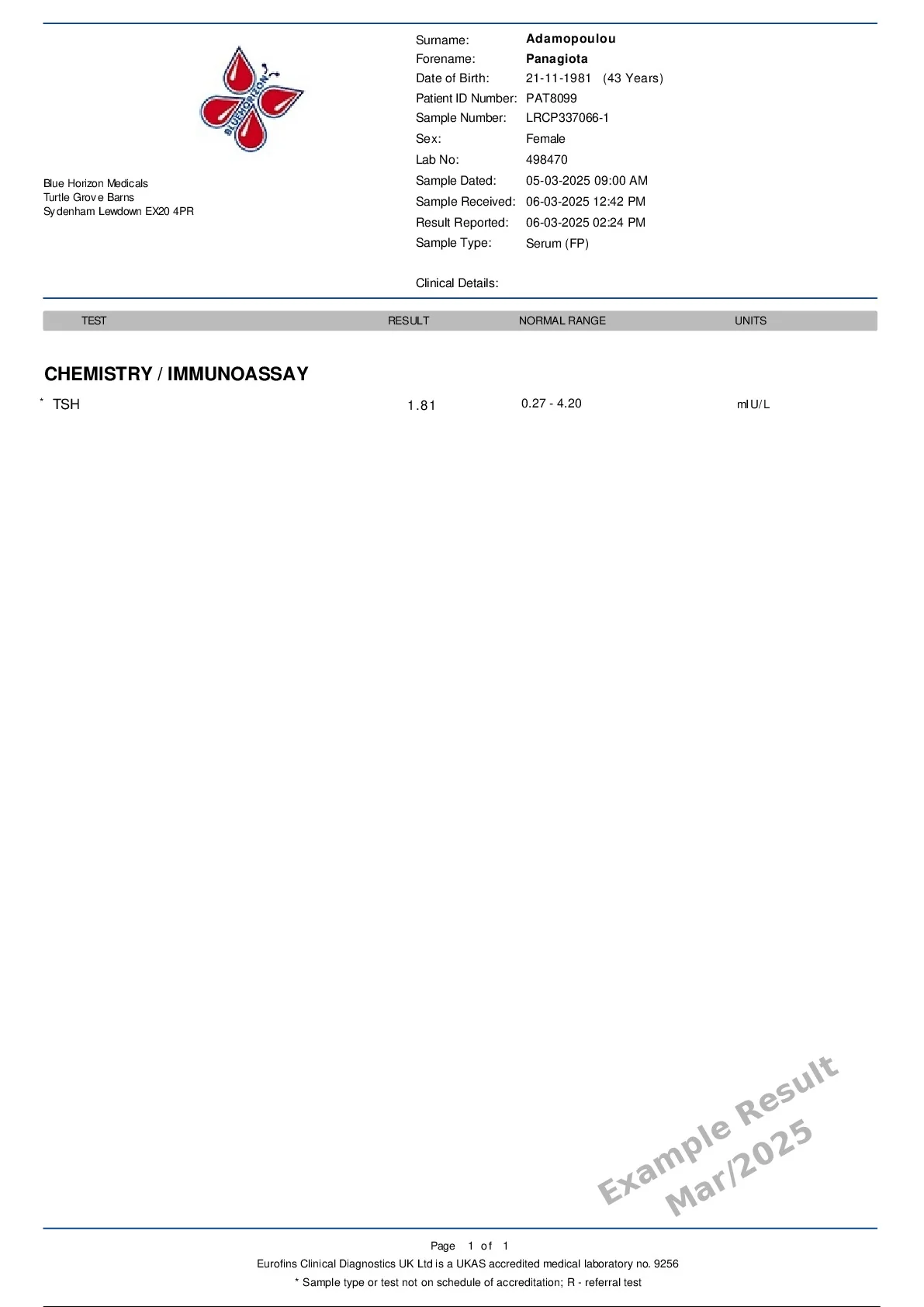
The absolute baseline, and often the only, test needed for monitoring stable thyroid maintenance regimes. If your Thyroid Stimulating Hormone (TSH) level is in the lower reaches of the normal range while you are taking thyroxine replacement, and you have no symptoms, it is likely that all is well and no further testing is required. A high level of TSH generally means an underactive thyroid gland (or under-replacement with thyroxine), while a low level implies an overactive thyroid gland (or over-replacement with thyroxine).
TSH (thyroid stimulating hormone) is a hormone manufactured in the pituitary gland (found in the brain). It s role is to stimulate thyroxine production in the thyroid gland (found in the neck). A high level within a health screening is associated with an underactive thyroid gland (hypothyroidism) and a low level is found if the thyroid gland is over-active (hyperthyroidism). Changes in the TSH level alone can indicate underlying thyroid problems even if the thyroxine levels are normal.
Warm/clammy skin
Shortness/loss of breath
Feeling warm and sweating excessively
Feeling hyperactive
Rapid heartbeat
Insomnia
Osteoporosis
Raised libido
Irregular bowel movements
Diarrhoea
Thin hair
Fertility problems
Irritability
Feeling cold constantly
Weight gain and/or difficulty losing weight
Brain fog
Issues with Breathlessness
Low basal temperature
Insomnia
Hair loss
Raised cholesterol
Low basal temperature
Dry hair and skin
Loss of libido
Constipation
Depression
Mood swings
Fertility problems
Product Information
Product Information
Shipping & Returns
Shipping & Returns
Description
The absolute baseline, and often the only, test needed for monitoring stable thyroid maintenance regimes. If your Thyroid Stimulating Hormone (TSH) level is in the lower reaches of the normal range while you are taking thyroxine replacement, and you have no symptoms, it is likely that all is well and no further testing is required. A high level of TSH generally means an underactive thyroid gland (or under-replacement with thyroxine), while a low level implies an overactive thyroid gland (or over-replacement with thyroxine).
TSH (thyroid stimulating hormone) is a hormone manufactured in the pituitary gland (found in the brain). It s role is to stimulate thyroxine production in the thyroid gland (found in the neck). A high level within a health screening is associated with an underactive thyroid gland (hypothyroidism) and a low level is found if the thyroid gland is over-active (hyperthyroidism). Changes in the TSH level alone can indicate underlying thyroid problems even if the thyroxine levels are normal.
Warm/clammy skin
Shortness/loss of breath
Feeling warm and sweating excessively
Feeling hyperactive
Rapid heartbeat
Insomnia
Osteoporosis
Raised libido
Irregular bowel movements
Diarrhoea
Thin hair
Fertility problems
Irritability
Feeling cold constantly
Weight gain and/or difficulty losing weight
Brain fog
Issues with Breathlessness
Low basal temperature
Insomnia
Hair loss
Raised cholesterol
Low basal temperature
Dry hair and skin
Loss of libido
Constipation
Depression
Mood swings
Fertility problems